Most individuals open their electrical panel just when something quits working. The lights head out, the microwave clock is blinking, and someone calls from the other space about a tripped breaker. Yet the panel is the quiet center of the home's electrical system. It takes one big stream of energy from the utility and divides it into lots of safe, workable https://tradesmanelectric.com/electrical-panel-components-explained-the-essentials-you-need-to-know/ circuits. If you understand how that circulation works, you make better options about upgrades, troubleshooting, and safety. You also avoid the typical mistakes that lead to nuisance trips, overheated wiring, or, in the worst cases, fire.
I started pulling cable and labeling circuits in older houses that had actually been played with for decades. You could inform which homes had careful owners and which ones had actually endured a lot of fast repairs. The panel constantly told the story. Neat bends, understandable circuit directory sites, well balanced loads, appropriate breaker types, and tidy grounding pointed to years of trouble-free service. Twisted conductors, double-lugged breakers, painted-over labels, and a missing out on bonding screw informed a various tale. Let's walk through what a great electrical panel does, how power flows through it, and the practical points that matter day to day.
From the street to your main lugs
The journey starts at the service point. Power from the energy transformer shows up as 2 hot conductors and a neutral. In The United States and Canada, this is a split-phase 120/240 volt service. Each hot leg is approximately 120 volts to neutral, and the two hots are 180 degrees out of stage, which provides 240 volts when utilized together. In numerous other parts of the world, single-phase service is 230 volts and the system architecture varies, however the concepts of safe circulation inside the electrical panel stay similar.
Those conductors pass through a meter, then into your service equipment. In numerous homes, the meter base is outdoors and the service detach and circulation panel are inside. In others, the main disconnect is incorporated into the exact same cabinet as the branch circuits. The first overcurrent gadget that can shut down power to the entire home is the "service disconnect." If that disconnect remains in the panel, you have a primary breaker panel. If it is upstream, feeding a distribution-only cabinet, that interior cabinet is a main lug panel.
That primary disconnect is not simply a switch. It is a calibrated device with an amperage score matched to the service size, normally 100, 125, 150, 200, or 400 amps in domestic settings. The service size is restricted by several things in combination: the transformer capacity, the conductors, the meter, and the rating of the service devices itself. Oversizing a main breaker in an undersized panel does not increase capacity. Whatever in the chain has to match or go beyond the load calculation.
Once past the detach, the hot conductors arrive on bus bars. Think about the buses as solid metal spines that carry power throughout the panel. Plug-in spaces accept breakers that secure onto these buses. Each nearby breaker "pole" rotates legs, left-right-left-right, which matters for balancing.
How the panel splits and routes power
The electrical panel divides power into branch circuits. Each circuit has an overcurrent protective gadget sized to protect the tiniest conductor on that circuit. That rule is more than a code phrase, it is a useful anchor. Breakers secure wire, not devices. If a space heating system is misused, you desire the breaker to trip before the wire in the wall overheats.
In a typical 200 amp property panel, you might find twenty to forty breaker areas. Some are single-pole 120 volt circuits. Others are two-pole 240 volt circuits for larger loads like varieties, heat pumps, water heaters, and EV chargers. A two-pole breaker straddles both bus legs. Internally, it connects the handles together so a trip on one leg detaches both.
Neutral and devices grounding conductors land on separate bars in subpanels, however in the service equipment they are bonded together. This difference trips up many DIYers. The neutral brings return existing under typical operation. The equipment grounding conductor must not. Bonding them downstream from the primary bonding point presents parallel courses and can stimulate metal enclosures under a fault. In a subpanel, separate the neutral bar from the cabinet, install a different ground bar, and feed the subpanel with four conductors: 2 hots, one neutral, and one equipment grounding conductor.
That bond at the service equipment also connects to the grounding electrode system. Ground rods, a UFER or concrete-encased electrode, and metallic water piping (if present and appropriately bonded) all connect to that system. The function is not to clear a breaker throughout a short circuit. That task belongs to the equipment grounding conductor back to the panel. The grounding electrode system stabilizes the home's electrical system to earth potential and helps dissipate lightning or other transient occasions. It likewise keeps the neutral referral stable.
Breakers are not all the same
Walk a finger down the rows of breakers and you will see a mix. Older homes often have thermal-magnetic breakers that protect against overloads and brief circuits. More recent work includes layers: GFCI for shock defense and AFCI for arc-fault fire protection, often both in a dual-function breaker. Restroom and kitchen small-appliance circuits require GFCI protection. Many living locations require AFCI. Garage and outside circuits frequently need GFCI, and laundry circuits often need both AFCI and GFCI security depending upon the jurisdiction and adoption of recent code cycles. If a receptacle device supplies GFCI security, you do not require to include a GFCI breaker for the very same downstream part, however you should make sure the protection actually covers the outlets where it is needed. Sometimes, a dual-function breaker streamlines whatever by securing the whole circuit from the panel.
Tandem breakers are worthy of reference. These are "two-in-one" breakers that fit in a single area but serve two circuits. Panels that accept them will have specific spaces designated for tandem use and an optimum count. People stuff tandems into spaces where they do not belong, chasing after more circuits without updating the panel. I have actually seen this cause overheating and problem tripping because the bus stabs were not developed for that load pattern. Constantly match the breaker type and brand to the panel, and follow the labeling inside the door.
Load balancing across the 2 legs
Residential split-phase panels work best when loads on the two hot legs are approximately stabilized. Perfect balance is impossible, however you can prevent extremes. If the left side carries high-current appliances and the ideal side carries mostly lighting, the neutral carries more present and voltage drop can increase under heavy load. A neat trick throughout layout is to stagger big two-pole loads and separate large single-pole loads across opposite legs. When a remodel includes an EV charger or a heatpump, I review the panel schedule, move a couple of single-pole breakers if needed, and tighten up the balance. It takes twenty minutes and settles in cooler buses and less light dimming problems when the oven kicks on.
Wire sizes and breaker scores, matched with purpose
Wire gauge, insulation ranking, and breaker size should line up. As a rule of thumb in copper conductors for 60 to 75 degree C terminals: 15 amp circuits utilize 14 AWG, 20 amp circuits use 12 AWG, 30 amp circuits use 10 AWG. Aluminum wire runs larger for the very same ampacity and requires anti-oxidant substance at terminations. Home appliances include nameplate rankings that dictate circuit size. A 40 amp range wants a 40 amp breaker and wire sized appropriately to range and temperature rating. Long terms may justify upsizing wire to limit voltage drop under load.
If a breaker trips consistently, withstand the desire to "bump it up" a size. That relocation hides an issue and invites a more major one. Either the linked load goes beyond the circuit style, or there is a fault. Detect, redistribute, or run a new circuit.
What a healthy electrical panel looks and feels like
An electrical panel should be uninteresting, in a good way. Covers fit, deadfronts are undamaged, breakers sit square, and labels are present and understandable. The panel must not smell hot. It needs to not buzz louder than a faint hum from a transformer somewhere downstream. The neutral and ground bars need to not be loaded so securely that conductors stack under one screw. Each conductor gets its own terminal unless the labeling particularly enables 2 of the exact same size. White insulation on neutrals remains white. If a white conductor is re-purposed as a hot leg in a cable television assembly feeding a two-pole gadget, it ought to be re-identified with tape or sleeving of the right color.
Inside the cabinet, conductors flex gracefully. Sharp bends and extended insulation signal stress. Cable television jackets extend into the cabinet, however not so far that you can not see the private conductor colors at the terminals. The primary bonding screw or strap, if this is the service devices, is present and tight. In a subpanel, that bonding screw is gotten rid of and the neutral bar isolates from the metal cabinet.
I once opened a panel that had a best exterior, then found a wadded nest of splices inside, wrapped in tape and drifting in space. Splicing inside a panel is frequently permitted when done with noted connectors and within the fill allowances of the cabinet, but it ought to be orderly. A splice is a connection, and every connection is a possible point of failure. Keep them to the minimum necessary.
How circuits are grouped and labeled, and why that matters
A great circuit directory is the very best time-saver throughout an interruption. Write clearly and specifically. "Kitchen outlets north wall" beats "Kitchen." "Basement lights west half" beats "Basement." Mark where shared neutrals exist, keep in mind which receptacles are on GFCI, and recognize any devoted equipment circuits. If you acquire a blank or vague directory, take an hour with an assistant, a plug-in tester, and a note pad. Shut off a breaker, discover what went dead, and compose it down. You will thank yourself the next time the disposal jams and you require the right breaker without trial and error.
This is likewise where you find multi-wire branch circuits, sometimes called shared-neutral circuits. In a split-phase system, two 120 volt circuits can share one neutral if they are on opposite legs and the breakers are handle-tied or a common-trip two-pole. If someone has actually placed them on the same leg, the neutral can be strained. Fixing this is as basic as moving one breaker to arrive at the opposite leg and utilizing a handle-tie or changing the pair with a common-trip two-pole breaker. This is not optional. It is a safety requirement and a useful necessity.
When to consider a panel upgrade
Panels do not last permanently. They can serve well for 30 to 40 years if dry, undisturbed, and lightly filled, however service needs change. A/c upgrades, a jacuzzi, a finished basement, an induction range, or an EV charger push the envelope. If you find yourself stacking tandem breakers, utilizing every last space, or relying on extension cables for irreversible home appliances, begin preparing. Some tradition brand names have known problems with breaker efficiency or bus connection stability. Electrical contractors who have actually worked in your location will understand which ones to approach with caution.
A service upgrade from 100 amps to 200 amps is a common project. Before devoting, run a load calculation. An expert can do this quickly and factor in diversity of loads, task cycles, and the specifics of your heating and water heater. All-electric homes with heatpump and EV charging typically take advantage of 200 amps. Some homes get by with load management devices that throttle car charging or water heating when other loads surge. Those devices can save money if trenching or utility upgrades are expensive, but they include complexity and points of failure. A clean 200 amp service with sufficient areas gives long-lasting simplicity.
Safety gadgets and contemporary requirements
Codes progress because technology and real-world experience expose spaces. GFCI proliferated after statistics showed its clear impact on reducing shock events. AFCI grew out of house fire information that traced ignition sources to harmed cables and loose connections that did not journey thermal-magnetic breakers. Now, dual-function breakers bring both technologies into lots of circuits. Rise protection at the service has actually also ended up being typical. Whole-home surge protective devices clamp down short-term voltage spikes from lightning or energy switching events. They do not make low-cost power strips obsolete, however they help safeguard delicate electronics and extend devices life. When I set up a brand-new panel, I typically consist of a Type 2 rise protector connected to a two-pole breaker near the top of the bus, with brief cause reduce impedance. Short and direct matters for surge devices.
Working inside the panel, threats and boundaries
There are two parts of an electrical panel you need to deal with differently. Downstream of the main breaker, turning that breaker off de-energizes the buses and the branch circuits. Upstream of the main, the service conductors stay live, even with the main off. That means the lugs where the utility power goes into threaten no matter what you make with the breaker. If you are not trained, do not reach near those lugs. Even numerous pros prefer to arrange an utility disconnect or utilize meter-pull treatments when moving or replacing a panel to eliminate that hazard.
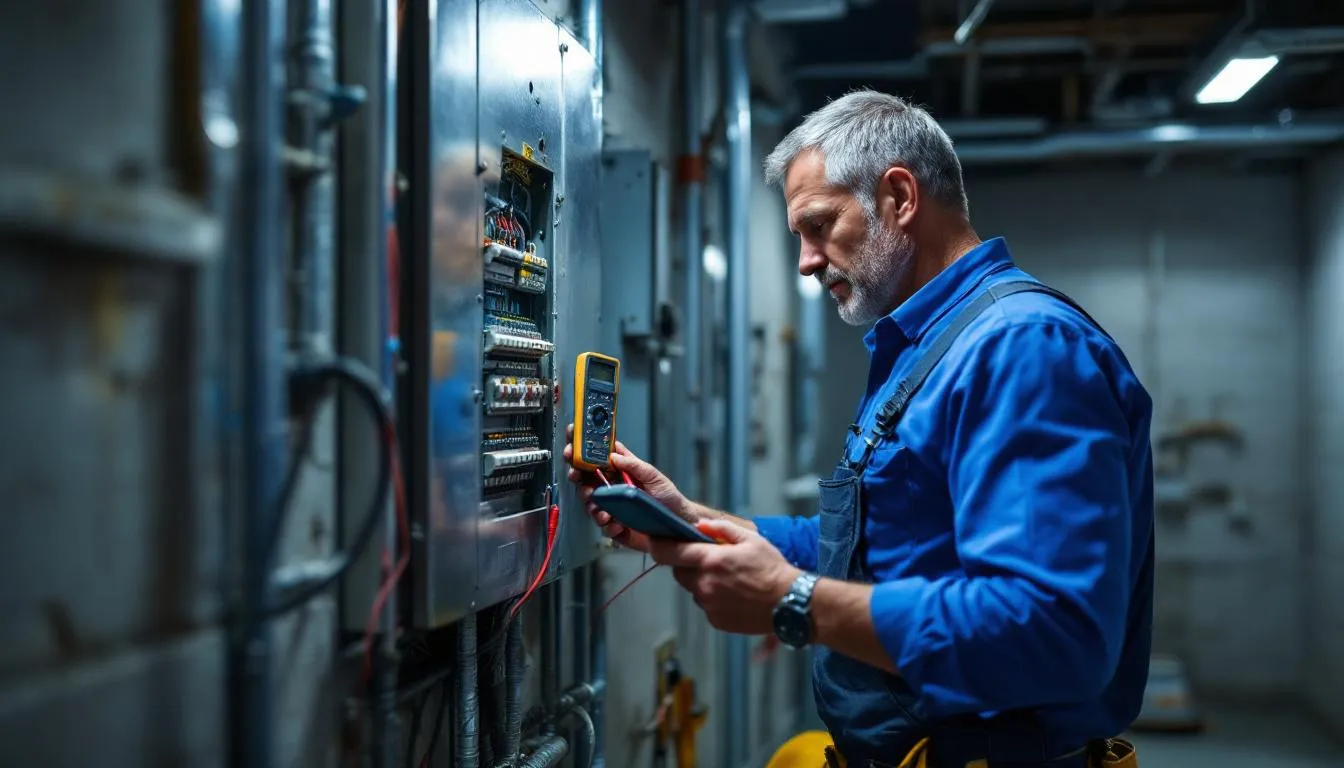
If you do small jobs like labeling circuits or switching a standard breaker of the appropriate type, you still require to be exact. Confirm the primary is off, verify with a meter, and keep one hand clear when working near buses to avoid bridging a course through your body. Use a flashlight and take your time. Torque matters. A lot of breaker and lug terminals have defined torque worths. A terminal that feels "tight" by hand may be under or over torqued. Under torque heats under load. Over torque damages threads or conductor strands. Electrical contractors bring torque screwdrivers for this reason.
Common pain points, and what they typically mean
Flickering lights when big devices begin normally point to voltage drop on a heavily loaded leg or at a loose neutral connection. I as soon as traced a persistent flicker to a rusty neutral lug on the service entryway. The fix brought back steady power and ended periodic GFCI trips in the kitchen.
A breaker that trips at random intervals often has a pattern hiding in plain sight. Note what performs at the time. Space heating units and hair clothes dryers are classic 12 amp devices that quickly press a 15 amp lighting circuit beyond its limitation. The solution is not a bigger breaker. It is a brand-new dedicated circuit or better load discipline.
Warm breakers, discoloration around a stab, or a breaker face that looks baked are warnings. Heat marks can suggest poor contact in between the breaker and the bus. Bus damage tends to spread out. Changing one breaker might not resolve a harmed stab. At that stage, a panel replacement is the electrical panel safer course.
Undersized neutrals in older aluminum cable television setups cause a particular set of issues, specifically under non-linear electronic loads. Modern homes do not have the harmonic material of a business office full of power supplies, but set-top boxes, battery chargers, and LED chauffeurs add up. If you are rewiring a home from the 1960s or 1970s with aluminum branch circuits, consider a comprehensive strategy that includes correct terminations, antioxidant compound, CO/ALR or AL compatible gadgets where needed, or pigtailing to copper with noted connectors. Piecemeal repairs just kick the can.
Where subpanels help and how to feed them correctly
Garages, additions, and completed basements often gain from a subpanel. A subpanel provides you short wire runs, more areas for future circuits, and less clutter in the primary. Feeding a subpanel is uncomplicated but should be done cleanly. Run a four-wire feeder sized for the load and distance. Secure it with a two-pole breaker in the main. In the subpanel, isolate neutral and ground. Drive a regional grounding electrode just if required, and bond it to the devices ground, not to the isolated neutral. Label the feeder breaker and the subpanel directory. Keep the subpanel in a place that satisfies working clearance guidelines. Tight closets and areas above laundry makers do not qualify.
One detail lots of people miss out on is feeder load variety. If the subpanel serves a workshop with periodic heavy tools, the feeder can be smaller than the amount of all tool nameplates due to the fact that they will not run at the same time. If it serves a basement with a mini-split, dehumidifier, server rack, and kitchenette, the responsibility cycle and concurrence may be higher. Strategy based on sensible usage, not simply wish lists.
Weather, environment, and enclosure choices
Not all electrical panels reside in conditioned area. Garages can be humid, and coastal locations are tough on steel. Outside service devices must be ranked for damp locations. Gaskets, weep holes, and tight penetrations keep water out and let condensation escape. Seal around channel entries with suitable fittings. Prevent top-entry flex into outdoor panels where wind-driven rain can wick along the spiral. If the panel is in a laundry room, consider lint and deterioration. Panels like tidy, dry, and cool. Provide space to breathe.
A percentage of maintenance goes a long way
Home electrical systems are not maintenance-free. Every two to three years, open the panel, blow out dust with dry air, and look for indications of heat, rust, or loose terminations. Cycle the primary breaker a number of times. Exercising breakers helps keep systems free. Change labels that have smeared. If breakers journey due to age-related weakening, replace them with the specific listed type. Spending plan for a professional inspection every years or after major renovations.
Practical checkpoints for homeowners
- Keep the area in front of the electrical panel clear for a minimum of 3 feet, flooring to ceiling, and 30 inches wide. Update the circuit directory site so it specifies and readable, utilizing a pencil you can revise. Verify that GFCI and AFCI defense exists where required, and test GFCI devices month-to-month using their test buttons. If a breaker journeys repeatedly, recognize the linked loads and call an expert if the cause is not obvious. Before adding big devices or an EV battery charger, have a load computation performed to determine if your electrical panel and service can support it.
The quiet worth of doing it right
A well-built electrical panel fades into the background of every day life. It does not buzz or smell, and it does not become warm to the touch. Breakers trip seldom and for understandable factors. The circuit labels make sense, the enclosure is tidy, and the system keeps up as your requirements change. When you include a heat pump or a cars and truck battery charger, the path is clear because the principles remain in place.
I have replaced panels that served for forty years without a single unusual event, and I have actually replaced three-year-old installs that stopped working because they cut corners. The distinction was not brand name or rate as much as discipline and respect for the essentials. Match breaker types to the panel, size conductors conservatively, keep neutrals and grounds where they belong, balance the load, protect where people and water meet, and record what you have. Those steps turn a box of copper and steel into a trustworthy heart for the home.
If you just do something this weekend, open your electrical panel door and check out the directory. If the words do not assist you find the kitchen area lights in a pinch, take the time to fix that. If you see empty knockouts without plugs, missing screws on the deadfront, or scorched breaker deals with, generate a certified electrical expert. A little attention now keeps the electrons streaming where they should, and keeps you from learning about your electrical system by flashlight.